If you are renovating a chalet, hotel, commercial property, or older home in Whistler, asbestos air monitoring can be an important part of the project. Enviromax Asbestos provides professional asbestos testing and air monitoring services across British Columbia. For testing support in Whistler and the Sea to Sky area, you can contact the team at 778-968-0258 or Enviromax04@gmail.com. The office is located in Surrey, British Columbia.
What Is Asbestos Air Monitoring?
Asbestos air monitoring involves collecting air samples during or after asbestos-related work and having those samples analyzed to determine whether airborne fibres are present.
This is different from bulk asbestos testing. Bulk testing checks whether a building material contains asbestos, while air monitoring looks at the air around the work area.
This can be particularly important during renovation and demolition projects involving older Whistler properties. Asbestos was widely used in building materials for decades, and it can still be found in products such as drywall compounds, flooring materials, insulation, textured ceilings, and other building components.
WorkSafeBC advises that asbestos can become airborne when older materials are disturbed during renovation, demolition, or repair work.
When Is Asbestos Air Monitoring Needed in Whistler?
The type and extent of monitoring depend on the work being performed and the level of asbestos risk.
Air monitoring may be used during:
- Asbestos removal and abatement
- Renovation or demolition involving known asbestos-containing materials
- High-risk asbestos work
- Containment and enclosure work
- Post-abatement clearance
- Investigations following an accidental disturbance
For high-risk asbestos work, WorkSafeBC requires clearance air sampling before a containment is dismantled, subject to the requirements in the Occupational Health and Safety Regulation.
Asbestos Air Clearance Testing After Abatement
One of the most important stages of asbestos air monitoring is clearance testing.
After asbestos removal and cleanup are complete, the area is visually inspected and air samples may be collected from inside the containment. The purpose is to determine whether airborne asbestos fibre levels are low enough for the containment to be dismantled.
Under WorkSafeBC’s OHS Regulation, for high-risk work, clearance air sampling must be conducted in previously contaminated areas before the containment is dismantled, and airborne asbestos fibre levels must not exceed 0.02 f/ml.
The clearance documentation can include the project address, scope of work, contractor information, visual inspection details, air sampling results, and other relevant project records.
What Does Air Monitoring Measure?
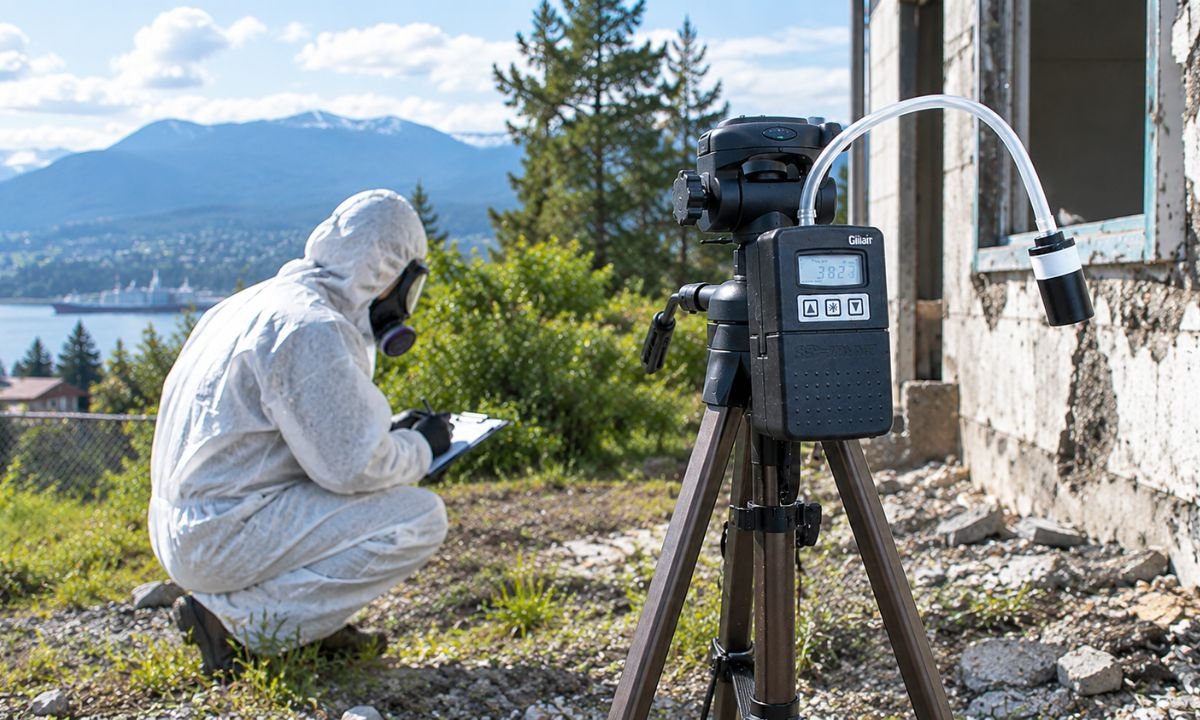
Air monitoring measures airborne fibre concentrations in a particular area or breathing zone.
Depending on the project, sampling can include:
Perimeter Air Monitoring
Samples may be collected outside the containment to help determine whether asbestos fibres are escaping into nearby areas.
Worker Exposure Monitoring
Personal air samples can be used to assess asbestos exposure for workers performing asbestos-related tasks.
Clearance Air Sampling
Clearance samples are collected after abatement and cleanup to help determine whether the containment can be safely removed.
Background Sampling
Background samples can provide information about airborne fibre levels before or around the time asbestos work begins.
The appropriate sampling approach depends on the project, work procedures, and applicable requirements.
WorkSafeBC Asbestos Air Testing Requirements
WorkSafeBC has specific requirements for asbestos work in British Columbia. Employers must take appropriate precautions to prevent or minimize the release of airborne asbestos fibres, and certain high-risk activities require air monitoring and clearance procedures.
WorkSafeBC also states that anyone performing asbestos abatement work in relation to buildings must meet the applicable training and certification requirements.
For this reason, property owners and contractors should determine the asbestos risk and required controls before renovation or demolition begins.
How Much Does Asbestos Air Sampling Cost in Whistler?
The cost of asbestos air monitoring in Whistler varies from project to project.
Factors that can affect the price include:
- Number of sampling locations
- Length of the sampling period
- Type of testing required
- Number of samples
- Laboratory analysis
- Travel to the property
- Emergency or after-hours service
- Size and complexity of the containment
As a general planning figure, asbestos air monitoring may cost several hundred dollars per sampling visit, while larger projects requiring multiple sampling locations, longer monitoring periods, or additional laboratory analysis can cost more.
Because every project is different, a site-specific quote is more useful than relying on a fixed price.
Do Older Whistler Properties Need Asbestos Testing?
If a property is older or contains materials that may contain asbestos, testing should be considered before renovation or demolition disturbs those materials.
Common materials that may require assessment include:
- Drywall joint compound
- Textured ceilings
- Vinyl flooring and backing
- Pipe and mechanical insulation
- Roofing materials
- Stucco and cement products
- Adhesives and other building materials
You cannot reliably determine whether a material contains asbestos simply by looking at it. WorkSafeBC recommends having suspected asbestos-containing materials assessed by qualified professionals before disturbing them.
This is why a pre-renovation asbestos survey in Whistler can be useful before starting demolition, remodeling, or major repairs.
Air Monitoring vs. Asbestos Material Testing
These services answer different questions.
Asbestos material testing:
Determines whether a specific building material contains asbestos.
Asbestos air monitoring:
Measures airborne fibres during or after asbestos-related work.
In many renovation projects, material testing or a hazardous materials survey comes first. Air monitoring may then be used during the removal work or as part of post-abatement clearance, depending on the project requirements.
What Happens If Clearance Testing Does Not Pass?
If clearance results do not meet the applicable requirement, the containment should not simply be dismantled.
The area may need additional cleaning, including HEPA vacuuming and other appropriate cleanup procedures, followed by another inspection and air sampling.
WorkSafeBC requires the area to be properly cleaned and controlled before a high-risk containment is dismantled.
How Long Does Asbestos Air Testing Take?
Sampling time depends on the type of monitoring and the project requirements.
The overall process generally includes:
- Reviewing the project and sampling requirements
- Setting up and calibrating sampling equipment
- Collecting air samples
- Sending samples for laboratory analysis
- Reviewing the results
- Providing the applicable documentation
Turnaround times can vary depending on the laboratory and whether standard or expedited analysis is requested.
Can I Use a DIY Asbestos Air Testing Kit?
DIY testing is not a suitable replacement for professional asbestos air monitoring when project documentation or regulatory compliance is required.
Professional monitoring involves appropriate sampling equipment, documented procedures, laboratory analysis, and project-specific interpretation.
If you suspect asbestos during a renovation, stop work in the affected area and have the material assessed by a qualified professional.
READ RELTED: Air Monitoring for Asbestos in Squamish, BC
Common Questions About Asbestos Air Monitoring in Whistler
Do I need asbestos air monitoring for a small renovation?
Not every small renovation requires the same type of air monitoring. The requirement depends on the material involved, the work being performed, and the level of asbestos risk.
What is an asbestos air clearance certificate?
An air clearance document records the results of post-abatement inspection and, where applicable, air sampling. It can form part of the documentation showing that the area was assessed before containment was removed.
How is air monitoring different from a pre-renovation asbestos survey?
A pre-renovation survey or hazardous materials assessment identifies materials that may contain asbestos. Air monitoring measures airborne fibres during or after asbestos-related work.
Can asbestos air monitoring be done in a Whistler chalet?
Yes. Air monitoring can be arranged for residential properties, chalets, commercial buildings, hotels, and other properties where asbestos-related work is taking place.
What should I do if asbestos is discovered during renovation?
Stop disturbing the suspected material and arrange for assessment by a qualified asbestos professional. WorkSafeBC advises stopping work when suspected asbestos is discovered during demolition, renovation, or salvage work until the material can be properly assessed and controlled.
Asbestos Air Monitoring in Whistler and the Sea to Sky Area
For property owners, contractors, chalet managers, and commercial operators, proper asbestos assessment and air monitoring can help reduce exposure risks and provide the documentation needed for asbestos-related projects.
Enviromax Asbestos provides asbestos testing and air monitoring services for projects in Whistler, Whistler Village, Creekside, Upper Village, Alpine Meadows, and the surrounding Sea to Sky area.
If you are planning renovation, demolition, asbestos removal, or post-abatement work, contact Enviromax Asbestos to discuss the testing requirements for your project.
Phone: 778-968-0258
Email: Enviromax04@gmail.com
Office: Surrey, British Columbia, Canada
Author
Environmental Safety & Hazmat Compliance Team
Enviromax Asbestos provides asbestos testing, air monitoring, and related hazardous materials assessment services across British Columbia.
READ RELTED: Air Monitoring for Asbestos Kent