If you are planning asbestos removal, refurbishment, demolition or maintenance work in Kent, air monitoring can help determine whether asbestos fibres have become airborne and whether an area is suitable for reoccupation. For professional testing services, arrangements should be made with a competent and appropriately accredited asbestos analyst.
What Is Asbestos Air Monitoring?
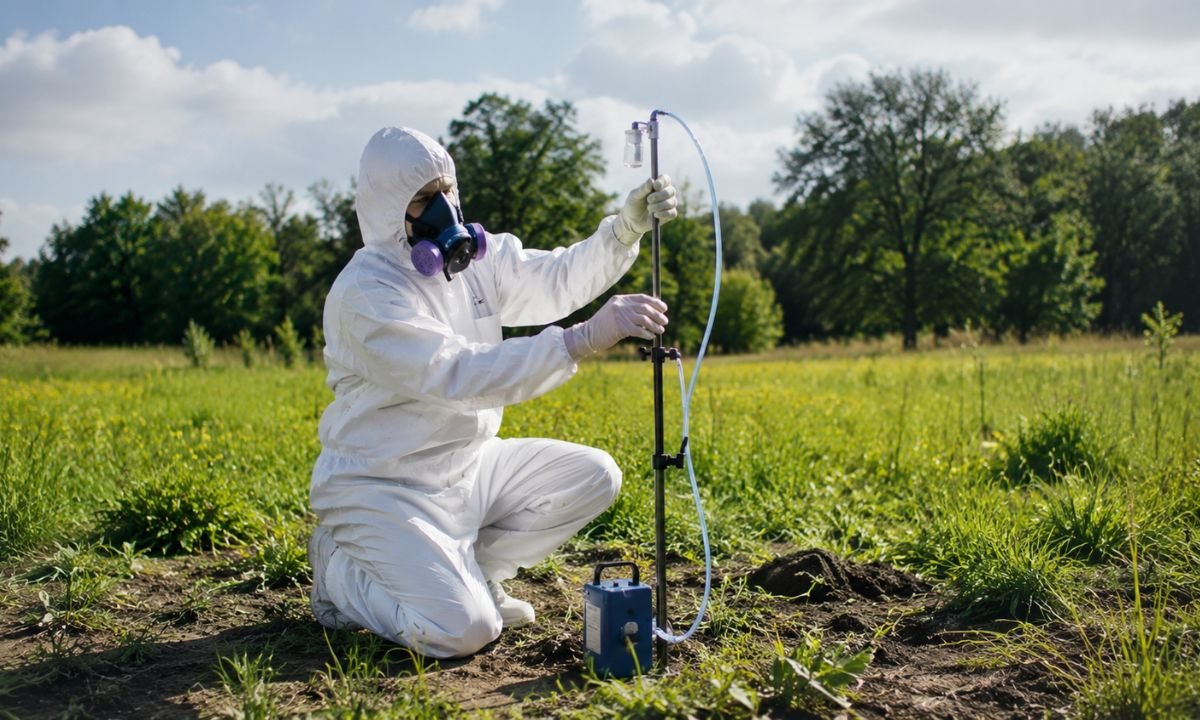
Asbestos air monitoring involves collecting air samples during or after asbestos-related work and analysing the samples for airborne fibres.
It can be used to:
- Monitor air around an asbestos removal enclosure
- Check whether containment is working properly
- Assess airborne fibre levels during work
- Support four-stage clearance procedures
- Provide reassurance following certain asbestos-related incidents or works
Air monitoring is different from asbestos sampling. A bulk sample identifies whether a material contains asbestos, while air monitoring looks at airborne fibre levels.
When Is Asbestos Air Testing Needed?
The type of air monitoring required depends on the work being carried out.
Four-Stage Clearance Testing
Four-stage clearance is used following asbestos removal where a formal clearance procedure is required. The process includes a thorough visual inspection, clearance air monitoring and other checks before a Certificate for Reoccupation is issued.
HSE guidance states that the analyst carrying out clearance certification must be impartial and independent. It also strongly recommends that the building owner or client independently appoints the analyst rather than relying on the asbestos removal contractor.
Leak or Perimeter Monitoring
Air sampling may be carried out outside an asbestos enclosure while removal work is underway. This helps check that asbestos fibres are not escaping into surrounding areas.
Background Monitoring
Background samples can be used to establish existing airborne fibre levels before particular asbestos work begins or where there is a concern about possible contamination.
Reassurance Air Testing
Following certain minor asbestos work, accidental disturbance or other concerns, air testing may be considered to provide additional information about airborne fibre levels. The appropriate testing should always be determined by the circumstances and applicable guidance.
Personal Air Monitoring
Personal monitoring measures exposure in a worker’s breathing zone. It is generally used to assess occupational exposure during asbestos-related work.
What Happens During Asbestos Air Monitoring?
The exact procedure depends on the type of monitoring being undertaken, but a typical sampling process involves:
- Planning the sampling – The analyst determines where samples are required and what the monitoring needs to demonstrate.
- Setting up sampling equipment – Calibrated air sampling pumps and filters are positioned at appropriate locations.
- Collecting air samples – A measured volume of air is drawn through a filter to collect airborne particles.
- Laboratory or on-site analysis – The collected samples are analysed using an appropriate method, such as Phase Contrast Microscopy where applicable.
- Reporting the results – The analyst provides the relevant results and documentation for the work undertaken.
Not every air monitoring job requires the same number of samples, sampling duration or type of analysis.
What Is the Asbestos Clearance Level?
One important distinction is often missed when discussing asbestos air testing.
The 0.01 fibres per millilitre (f/mL) figure is used as the clearance indicator for four-stage clearance air testing. It should not be described as the general legal asbestos exposure limit.
The current Great Britain asbestos control limit is 0.1 fibres per millilitre (f/mL), measured as a four-hour time-weighted average. HSE also makes clear that this control limit is not a level below which asbestos exposure can simply be considered safe; exposure should be prevented or reduced as far as reasonably practicable.
For this reason, an asbestos air monitoring report should always be interpreted in the context of the type of testing being carried out.
How Much Does Asbestos Air Monitoring Cost in Kent?
The cost of asbestos air testing varies depending on the type of monitoring, the size of the property, the number of sampling points, the duration of the work and whether a four-stage clearance is required.
As an indicative guide, some private testing services may fall within the following ranges:
- Background or reassurance testing: approximately £250–£400 + VAT
- Perimeter or enclosure monitoring: approximately £350–£550 + VAT
- Four-stage clearance: approximately £450–£750 + VAT
- Emergency or out-of-hours testing: potentially higher
These are indicative figures rather than fixed Kent-wide prices. A proper quotation should be based on the site and the type of testing required.
How to Choose an Asbestos Air Testing Company
When arranging asbestos air monitoring, property owners and site managers should consider:
- Whether the analytical organisation is appropriately UKAS accredited for the relevant asbestos analytical activities
- The qualifications and competence of the analyst
- Whether the analyst is independent from the asbestos removal contractor
- What type of testing is actually required for the project
- Whether the final report and certificates clearly document the work and results
HSE’s HSG248 guidance specifically addresses asbestos analytical procedures and the independence required for site clearance and certification.
READ RELTED: Air Monitoring for Asbestos in Harrison Hot Springs, BC
Common Asbestos-Containing Materials in Older Kent Properties
Asbestos may be encountered in many types of older buildings across Kent. Examples include:
- Asbestos cement roofing and rainwater products
- Textured decorative coatings
- Floor tiles and associated adhesives
- Pipe insulation
- Asbestos insulating board (AIB)
- Certain ceiling and wall products
- Boiler and heating-system components
The presence of asbestos cannot be confirmed simply by looking at a material. Where asbestos may be present and work could disturb it, appropriate surveying and sampling should be considered before work begins.
What Happens If an Air Clearance Test Fails?
If a required clearance test does not meet the applicable clearance criteria, the area should not be released for reoccupation.
The asbestos removal contractor may need to carry out additional cleaning and remedial work before further inspection and air testing takes place. The exact action depends on the findings and the clearance procedure being followed.
Frequently Asked Questions
How long does asbestos air monitoring take?
The duration varies depending on the type of monitoring and the site. A simple air test may take several hours, while enclosure monitoring or a four-stage clearance can require considerably more time.
Is asbestos air testing required after every asbestos removal job?
Not necessarily. The testing required depends on the type of asbestos work and the applicable regulations and guidance. Four-stage clearance is particularly relevant to licensed asbestos removal work.
Can I use a DIY asbestos air testing kit?
DIY kits do not replace professional asbestos analytical services where formal air monitoring or clearance certification is required. Appropriate sampling equipment, analysis and competent interpretation are necessary.
What is the difference between asbestos air testing and asbestos sampling?
Bulk sampling takes a physical sample of a material to determine whether it contains asbestos. Air monitoring samples the air to assess airborne fibre levels.
Does air testing identify the type of asbestos?
Standard Phase Contrast Microscopy does not identify the specific asbestos mineral type. Where identification of fibre type is required, other analytical techniques may be appropriate.
Do I need asbestos air testing before renovating my home?
Air testing is not normally the first step in assessing whether asbestos is present. Where renovation could disturb asbestos-containing materials, an appropriate asbestos survey and material sampling may be required before work begins.
Final Thoughts
Asbestos air monitoring provides useful evidence about airborne fibre levels during and after asbestos-related work. The correct type of testing depends on the project, the material involved and the requirements that apply to the work.
For projects in Kent, property owners, landlords and site managers should use a competent analytical organisation and make sure any required clearance testing is carried out independently and documented properly. HSE’s HSG248 provides detailed guidance on asbestos analytical procedures and four-stage clearance.
Official Guidance
- Health and Safety Executive (HSE) – Asbestos guidance
- HSE HSG248 – Asbestos: The Analysts’ Guide
- UKAS – United Kingdom Accreditation Service
READ RELTED: Air Monitoring for Asbestos in Agassiz, BC