Fire and water incidents cause sudden, structural damage to homes and commercial properties. Before restoration crews begin tearing out saturated drywall, damaged flooring, or charred building materials, assessing hazardous material risks is a critical first step. Enviromax Asbestos Consulting Ltd. provides professional asbestos testing services across British Columbia, supporting restoration contractors, insurance adjusters, property managers, and homeowners during disaster recovery.
Testing building materials for asbestos prior to restoration work protects workers and occupants from airborne fiber exposure. It also helps project managers stay aligned with applicable WorkSafeBC requirements and provincial health guidelines.
Our Asbestos Testing Services
Enviromax Asbestos Consulting Ltd. delivers clear, timely testing solutions tailored to the fast-paced nature of fire and water damage restoration.
- Targeted Bulk Material Sampling: Collecting samples from damaged or surrounding building components.
- Emergency & Rapid-Response Testing: Priority turnaround options to keep emergency restoration schedules moving safely.
- Pre-Restoration Hazard Assessments: Documenting asbestos locations before demolition or drying equipment setup.
- Independent Sampling Reports: Clear documentation detailing sample locations, material types, and laboratory findings.
- Consultation for Scope of Work: Helping restoration teams determine where containment or professional removal is needed.
Understanding Asbestos Risks in Restoration Projects
Why Fire and Water Damage Increases Asbestos Hazards
Building materials manufactured prior to the late 1990s frequently contain asbestos. Under normal conditions, intact materials like vinyl flooring, plaster, or duct insulation keep asbestos fibers trapped. However, fire, heat, pressure, high-volume water, and physical destruction destabilize these materials.
When damaged building components dry out or undergo forced drying with air movers and dehumidifiers, friable asbestos fibers can easily become airborne and migrate throughout the structure.
Common Asbestos-Containing Materials in Affected Structures
Restoration projects frequently disturb building assemblies that may harbour asbestos:
- Walls and Ceilings: Drywall joint compound, interior plaster, stippled or textured ceiling finishes.
- Flooring: Vinyl sheet flooring, asphalt tile, concealed underlayment, and subfloor adhesives.
- Thermal Insulation: Vermiculite loose-fill insulation, pipe wrap, duct insulation, and boiler jacket material.
- Exterior & Structural Elements: Cement board siding, roofing felts, and window putty.
Sampling and Laboratory Analysis
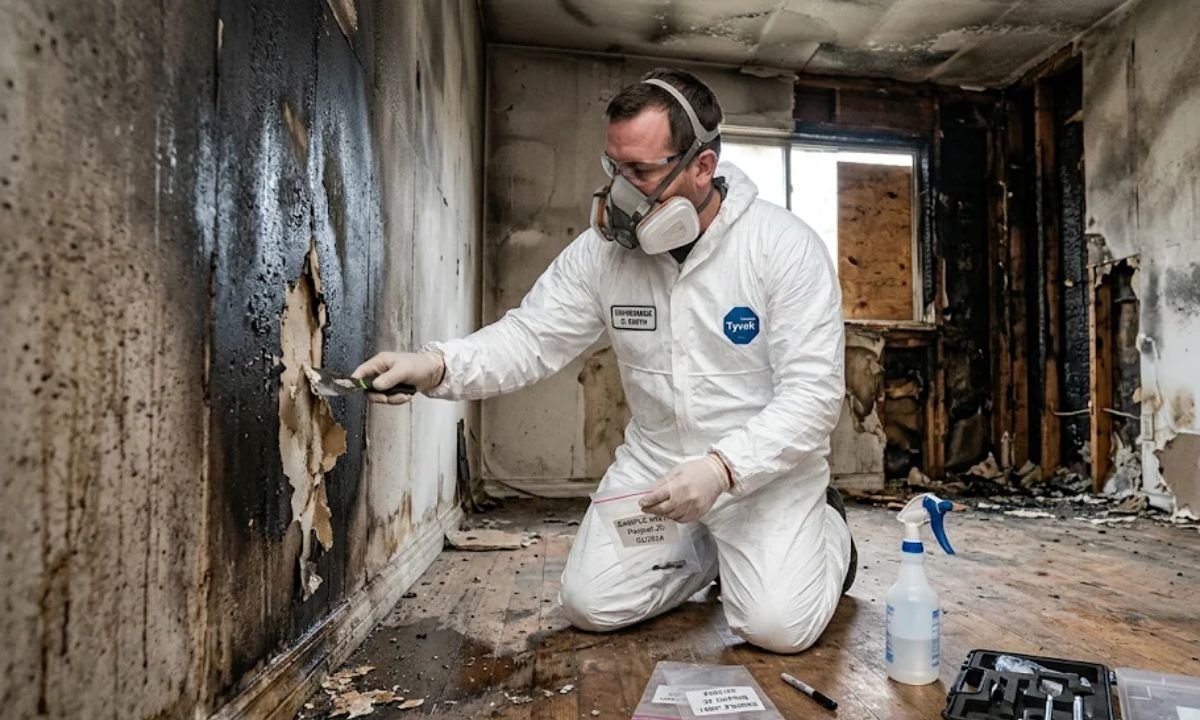
Determining whether a material contains asbestos cannot be done visually. Enviromax technicians collect bulk samples of suspect materials following established safety protocols. Samples are analyzed by accredited third-party laboratories using Polarized Light Microscopy (PLM) or Transmission Electron Microscopy (TEM) to confirm fiber presence, type, and percentage concentration.
When Is Asbestos Testing Needed During Restoration?
Asbestos testing should occur as early as possible in the restoration workflow to prevent cross-contamination and unnecessary delays.
- Initial Property Assessment: Right after emergency water extraction or fire stabilization, before invasive drying or structural demolition begins.
- Prior to Removing Saturated Materials: Before cutting out wet drywall, lifting damaged flooring, or removing acoustic ceiling tiles.
- Before Setting Up High-Airflow Equipment: Air movers and axial fans can blow loose fibers across un-impacted areas if asbestos-containing materials are damaged or disturbed.
- Insurance Claim Documentation: Insurance providers often require formal laboratory confirmation of hazardous materials to approve abatement line items in restoration scopes.
- Strata and Commercial Losses: Multi-unit or commercial restoration projects require clear clearance and risk documentation for public health and tenant safety.
Professional & Independent Service for Restoration Contractors
Enviromax operates as an independent asbestos consulting firm. Because we focus on professional testing, risk assessments, and air monitoring rather than performing abatement ourselves, property owners and restoration managers receive unbiased evaluations.
We work closely with:
- Restoration Contractors: Providing reliable, rapid sampling so emergency worksites stay on schedule.
- Insurance Adjusters & Claims Managers: Delivering accurate laboratory reports to verify environmental scope needs.
- Property Managers & Strata Corporations: Protecting building occupants and maintaining clear compliance records.
- Commercial & Residential Property Owners: Offering straightforward guidance during stressful property losses.
Integrating independent testing into the restoration workflow maintains transparency and ensures that Asbestos Removal or containment strategies are applied only where necessary.
Fire, Water & Demolition Project Workflows
Every restoration project carries unique site conditions depending on the source and extent of damage:
Water Losses (Category 1, 2, and 3)
Clean or grey water leaks often saturate drywall, insulation, and subflooring. Because drying requires air movement, testing suspect drywall joint compound or floor tiles prevents air movers from spreading asbestos fibers. In black water (sewage) scenarios, materials often require immediate disposal, making rapid bulk sampling essential before teardown.
Fire and Smoke Damage
Fires weaken structural building materials, char insulation, and leave debris scattered across the property. Heat can break down binding agents in building products, making asbestos friable. Sampling undamaged or partially damaged materials adjacent to the burn area establishes safe working boundaries for smoke cleanup and reconstruction.
Reconstruction and Structural Repairs
Once emergency stabilization finishes, rebuilding often involves further disturbance to existing walls, framing, and utility corridors. Establishing a complete hazard profile at the start prevents unexpected project stops during the rebuild phase. Where abatement is necessary, restoration contractors rely on follow-up Air Monitoring and air clearance testing to verify site safety before reconstruction begins.
Service Areas – British Columbia
Enviromax Asbestos Consulting Ltd. provides asbestos testing and environmental consulting services across the Lower Mainland and Fraser Valley:
Lower Mainland / Metro Vancouver
- Vancouver
- Burnaby
- Richmond
- Surrey
- Delta
- White Rock
- New Westminster
- Coquitlam
- Port Coquitlam
- Port Moody
- Maple Ridge
- Pitt Meadows
- North Vancouver
- West Vancouver
Fraser Valley
- Langley
- Abbotsford
- Mission
- Chilliwack
- District of Hope
- Agassiz
- Harrison Hot Springs
- Kent
Why Choose Enviromax Asbestos Consulting?
Enviromax Asbestos Consulting Ltd. brings field expertise and practical environmental knowledge to emergency restoration and property damage projects.
- WorkSafeBC Licensed: Holds WorkSafeBC Asbestos Licence AAL-00001650.
- Independent Assessment: Unbiased testing, consulting, and monitoring services focused purely on site safety and compliance.
- Professional Field Sampling: Rigorous sampling procedures following recognized industry guidelines.
- Clear Documentation: Detailed, easy-to-read laboratory reports suitable for property owners, insurance files, and contractors.
- Regional Coverage: Serving residential, commercial, and industrial clients throughout the Lower Mainland and Fraser Valley.
Frequently Asked Questions
Why is asbestos testing necessary before water damage restoration?
Restoration drying equipment uses high-velocity air movement. If wet drywall, plaster, or flooring contains asbestos and becomes damaged or disturbed, air movers can spread hazardous fibers throughout the building. Testing identifies materials early so drying or removal can occur safely.
How quickly can asbestos testing results be returned for emergency restoration?
Standard laboratory analysis takes 24 to 48 hours, but rush turnaround options (including same-day or 24-hour service) are available for urgent fire and water loss situations where emergency stabilization is paused.
Can water-damaged materials be tested for asbestos while still wet?
Yes. Bulk samples can be taken from saturated drywall, wet plaster, or damp flooring. The laboratory prepares and dries the samples appropriately prior to microscope analysis.
What happens if asbestos is found in a restoration work zone?
If laboratory analysis confirms asbestos content above regulatory thresholds, the affected area must be contained. A qualified abatement contractor must perform Asbestos Removal under appropriate containment controls, followed by visual inspection and Air Monitoring where required.
Is testing needed if the property was built after 1990?
While older buildings carry a much higher risk, some construction products containing asbestos were used up until more recent regulatory bans took effect. Testing suspect materials regardless of age provides definitive verification and protects site workers.
Who pays for asbestos testing during an insurance restoration claim?
In most fire and water damage insurance claims, hazardous material testing is a standard preparatory step included in the emergency mitigation scope. Check with your insurance adjuster or restoration manager regarding specific policy details.
BOOK ASBESTOS TESTING
ENVIROMAX ASBESTOS CONSULTING LTD.
Asbestos Testing | Air Monitoring | Air Clearance | Hazardous Materials Surveys
Call: 236-838-2640
Email: ENVIROMAX04@GMAIL.COM
Serving the Lower Mainland & Fraser Valley, BC
READ MORE: Asbestos Testing for Demolition Projects in British Columbia | Enviromax Asbestos Consulting