If you are planning a renovation, demolition, or asbestos removal project in Richmond, air monitoring can help confirm whether asbestos fibres are being properly controlled during the work and whether an area is ready for re-occupancy afterward. Enviromax Asbestos provides professional asbestos testing and air monitoring services in Richmond and throughout British Columbia. For a consultation, call +1 778 968 0258 or email Enviromax04@gmail.com.
What Is Asbestos Air Monitoring?
Asbestos air monitoring involves collecting air samples and having them analyzed to determine whether airborne asbestos fibres are present and, where applicable, at what concentration.
It is different from asbestos material testing. A material sample tells you whether a particular product contains asbestos; air monitoring looks at the air around the work area.
Depending on the project, air sampling may be used:
- During asbestos abatement to monitor conditions around the work area
- After removal to determine whether the area meets the applicable clearance requirements
- As background sampling before work begins, when a baseline is useful
For high-risk asbestos work, WorkSafeBC requires air sampling in specified areas during the work and requires clearance air sampling before certain containment systems are dismantled. The clearance level specified in the regulation is 0.02 fibres per millilitre (f/mL).
When Is Air Monitoring Needed in Richmond?
The need for air monitoring depends on the type of asbestos work being performed and its risk level.
If you are renovating an older Richmond property, the first step is usually to determine whether materials that will be disturbed contain asbestos. Homes and buildings constructed before the early 1990s can contain asbestos-containing materials in products such as flooring, insulation, textured ceiling finishes, drywall compounds, and other building materials.
If asbestos is identified, the work should be planned according to the applicable WorkSafeBC requirements before materials are disturbed.
Air monitoring may then form part of the asbestos-abatement plan, particularly for higher-risk work where containment and controlled removal are required.
The important point is simple: do not wait until demolition or renovation has started to determine whether asbestos is present.
What Does WorkSafeBC Require?
British Columbia introduced new asbestos-abatement licensing and worker-certification requirements on January 1, 2024.
Employers carrying out asbestos abatement work in relation to buildings must hold an Asbestos Abatement Licence (AAL), while workers performing asbestos abatement work must have the appropriate WorkSafeBC certification. WorkSafeBC maintains a public registry that homeowners can use to verify an abatement contractor’s licence status.
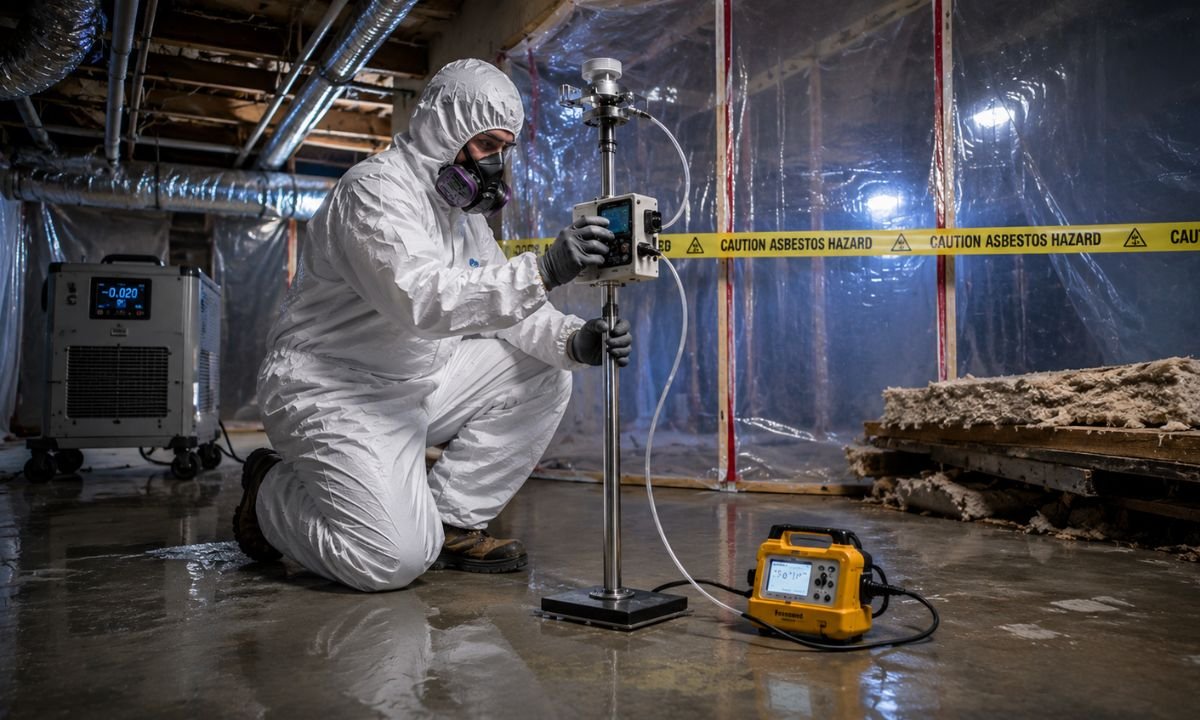
For certain high-risk asbestos activities, WorkSafeBC also requires air sampling during the work and clearance air sampling before containment is dismantled. The regulation states that airborne asbestos fibre levels in the previously contaminated areas must not exceed 0.02 f/mL for clearance.
Because requirements can vary depending on the work being performed, homeowners should have the project assessed before renovation or demolition begins.
Air Monitoring vs. Asbestos Testing and Air Clearance
These services are related, but they are not the same.
Asbestos inspection or survey: Identifies materials that may contain asbestos and determines what needs further investigation.
Bulk asbestos testing: A physical sample of a suspect material is sent to a laboratory to determine whether asbestos is present.
Air monitoring: Samples the air to assess airborne asbestos fibres during or after asbestos-related work.
Air clearance: A final air-sampling process used after qualifying abatement work to confirm that the area meets the applicable clearance requirement before containment is removed or the space is returned to use.
For many renovation projects, the process begins with inspection and material testing, followed by appropriate controls and air monitoring if asbestos abatement is required.
How Does Asbestos Air Monitoring Work?
The exact procedure depends on the project, but a typical process includes:
1. Review of the Work Area
The monitoring professional reviews the scope of work, the containment setup, and the areas that need to be monitored.
2. Air Sample Collection
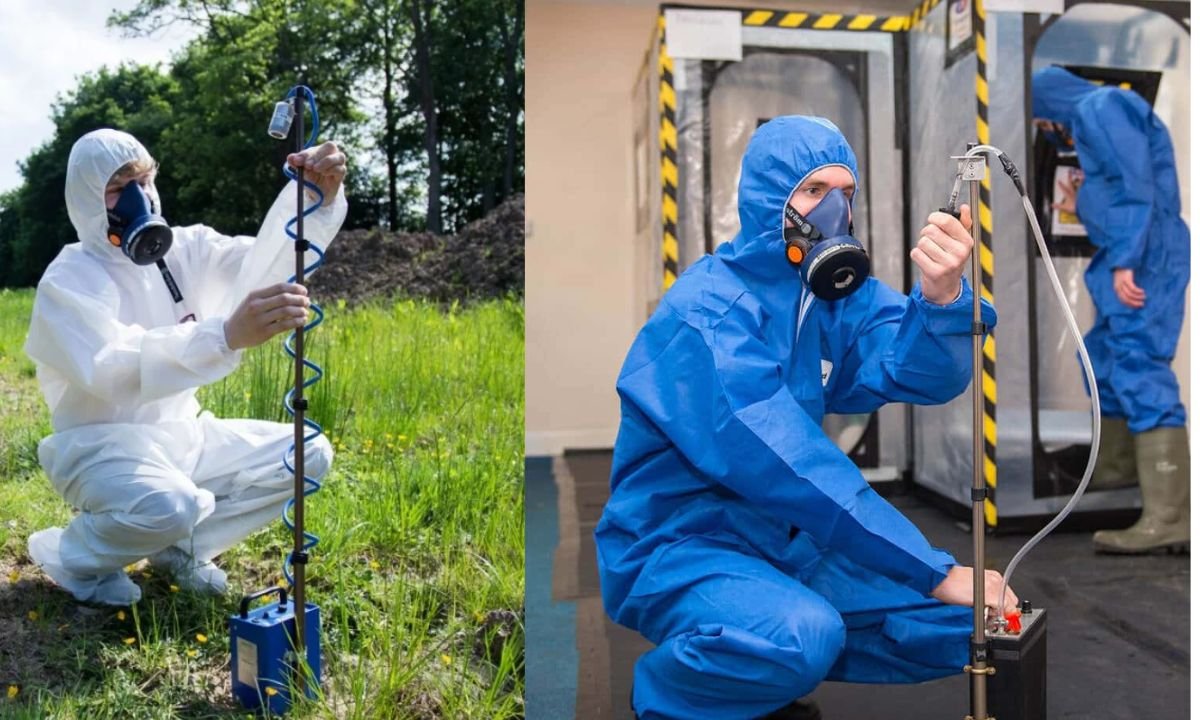
Air samples are collected using calibrated sampling equipment at locations appropriate to the work. Depending on the project, this can include areas inside or outside the containment.
3. Laboratory Analysis
The collected samples are submitted for laboratory analysis using an appropriate analytical method.
4. Results and Documentation
The results are documented in a report. For clearance work, the report can be used to demonstrate whether the applicable clearance criterion has been met.
For high-risk work, WorkSafeBC requires the employer to make air-sampling results available to workers within 24 hours of completing sample collection.
How Much Does Asbestos Air Monitoring Cost in Richmond?
There is no single price for asbestos air monitoring because the cost depends on the project.
Factors that can affect the price include:
- Number of air samples required
- Size and layout of the work area
- Type of asbestos work being performed
- Number of monitoring visits
- Laboratory analysis
- Required turnaround time
- Reporting and documentation
For a small residential project, costs may be considerably lower than for a large commercial abatement project requiring multiple sampling locations and repeated site visits.
Rather than relying on a generic online price, ask for a written quote that clearly explains what is included, including sampling, laboratory analysis, reporting, and any additional visits.
Why Professional Air Monitoring Matters
Asbestos fibres are too small to identify reliably by sight. Once asbestos-containing material is disturbed, appropriate controls are needed to prevent fibres from spreading beyond the work area.
Professional air monitoring provides documented sampling and laboratory results that can help demonstrate whether the applicable requirements have been met.
It also gives homeowners, contractors, and building occupants a clearer basis for deciding when a controlled work area can be released for normal use.
Choosing an Asbestos Air Monitoring Company in Richmond
Before hiring a company, ask a few basic questions:
Is the company properly qualified for the work?
Ask about the qualifications and certifications of the people performing the work.
Who will perform the air monitoring?
Understand whether monitoring is being performed independently from the abatement contractor and whether this arrangement is appropriate for your project.
Which laboratory will analyze the samples?
Ask about the laboratory’s accreditation and the analytical method being used.
What will I receive after testing?
You should know whether the service includes a written report, laboratory results, sampling information, and clearance documentation where applicable.
What is included in the quote?
Confirm whether laboratory fees, travel, additional samples, and rush analysis are included.
You can also verify an asbestos-abatement contractor’s current licence through WorkSafeBC’s Asbestos Abatement Licence Registry.
Common Questions About Asbestos Air Monitoring in Richmond
Do all asbestos projects require air monitoring?
Not necessarily. Air-monitoring requirements depend on the type and risk level of the asbestos work. Certain high-risk activities have specific air-sampling and clearance requirements under WorkSafeBC regulations.
Do I need air monitoring if asbestos is present but has not been disturbed?
Simply identifying asbestos in a building does not automatically mean that air monitoring is required. If asbestos-containing material is left intact and is not being disturbed, the appropriate approach may be to manage it in place. The requirements change when renovation, demolition, or abatement work will disturb the material.
What is the WorkSafeBC clearance level?
For the high-risk work covered by the relevant regulation, clearance air sampling must show airborne asbestos fibre levels of no more than 0.02 f/mL before the applicable containment can be dismantled.
How long does asbestos air monitoring take?
The time required depends on the size and complexity of the project, the number of samples, and the laboratory turnaround selected. Sampling itself may take several hours for certain clearance procedures, while laboratory results can take longer.
Your monitoring company should provide the expected timeline before work begins.
Can I collect my own asbestos air samples?
Homeowners should not rely on consumer air-testing equipment to manage an asbestos-abatement project. Proper sampling requires appropriate equipment, procedures, documentation, and laboratory analysis. For regulated abatement work, use qualified professionals who understand the applicable WorkSafeBC requirements.
Is asbestos dangerous if it is not disturbed?
Asbestos-containing material that remains intact and undisturbed generally presents less risk than material that is damaged or disturbed. The risk increases when asbestos fibres become airborne, which can happen during renovation, demolition, repair, or deterioration.
Do I need an asbestos inspection before renovating an older Richmond home?
If renovation or demolition will disturb materials that may contain asbestos, testing should be considered before work begins. Older buildings can contain asbestos in a wide range of materials, and you cannot reliably determine whether a material contains asbestos simply by looking at it.
How can I verify an asbestos-abatement contractor?
WorkSafeBC maintains an Asbestos Abatement Licence Registry where homeowners can check whether an asbestos-abatement contractor has a current licence.
Before You Start Renovation
If you are renovating an older Richmond property, a simple approach is:
- Determine the age and renovation history of the property.
- Identify materials that may be disturbed.
- Arrange appropriate asbestos inspection and testing before work begins.
- If asbestos is confirmed, make sure the work is planned and controlled appropriately.
- Verify that the abatement contractor meets current WorkSafeBC licensing and certification requirements.
- Arrange air monitoring or clearance testing where required for the project.
- Keep the inspection reports, laboratory results, and clearance documentation with your renovation records.
Planning these steps before demolition can help prevent unexpected delays and unnecessary exposure.
Conclusion
Asbestos air monitoring is an important part of asbestos-abatement work when required by the nature of the project and applicable WorkSafeBC requirements. It provides documented information about airborne fibre levels and, for applicable high-risk work, helps confirm whether an area meets the required clearance level before containment is removed.
If you are planning renovation or demolition in Richmond and suspect asbestos may be present, have the materials assessed before work begins.
For professional asbestos testing and air monitoring services, contact Enviromax Asbestos at +1 778 968 0258 or Enviromax04@gmail.com.
Official Sources
- WorkSafeBC — Asbestos Certification and Licensing
- WorkSafeBC — Occupational Health and Safety Regulation, Part 6: Substance-Specific Requirements
- WorkSafeBC — Asbestos Abatement Licence Registry
- Health Canada — Asbestos
- NIOSH — Method 7400, Asbestos and Other Fibres by PCM
READ RELATED: Air Monitoring for Asbestos in Vancouver