If you’re planning a renovation, demolition, or asbestos removal project in Delta, professional air monitoring can help confirm that asbestos fibres are being properly controlled during the work. Enviromax provides asbestos testing and air monitoring services throughout Delta and the Lower Mainland. For professional testing services, call +1 778 968 0258 or email Enviromax04@gmail.com. Our office is located in Surrey, British Columbia, Canada.
What Is Asbestos Air Monitoring?
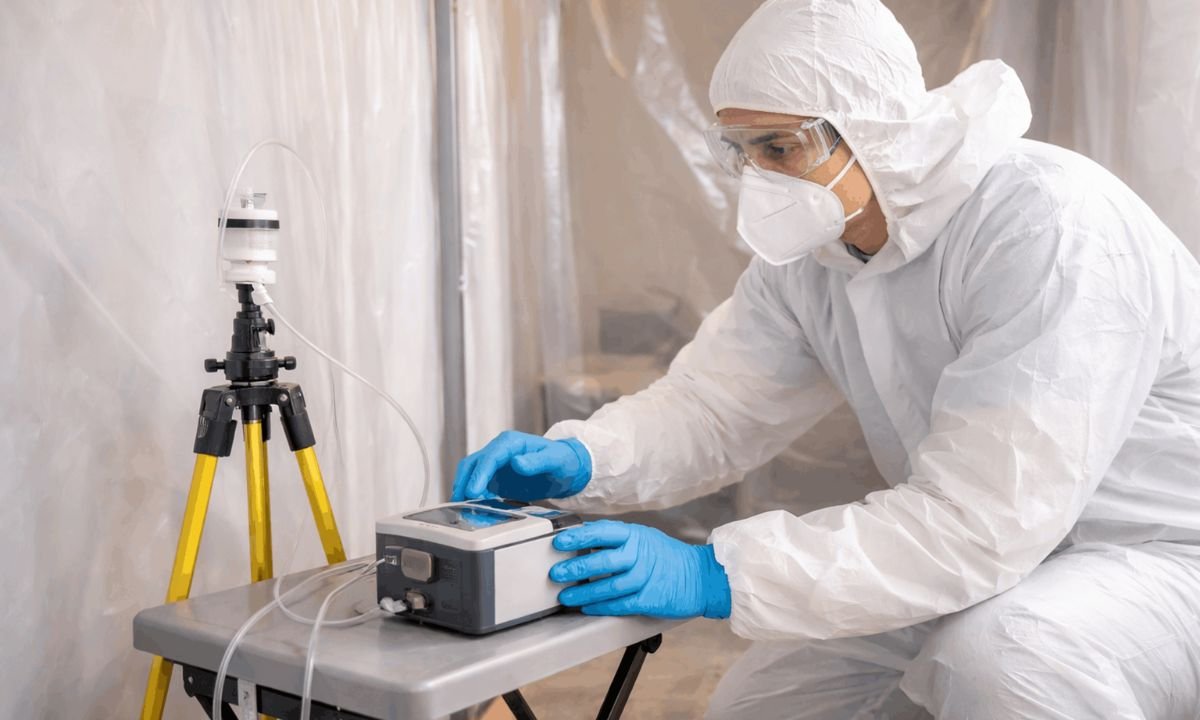
Asbestos air monitoring involves collecting air samples to check for airborne asbestos fibres during asbestos-related work. It is different from an asbestos inspection, which identifies materials that may contain asbestos.
When asbestos-containing materials are disturbed during renovation or demolition, fibres can become airborne. Proper monitoring helps determine whether asbestos is being adequately controlled and whether the work area meets the applicable requirements before containment is removed.
WorkSafeBC requires air sampling during certain high-risk asbestos activities and requires clearance air sampling before containment is dismantled in the circumstances covered by the regulation.
When Is Air Monitoring Needed in Delta?
The need for air monitoring depends on the type of asbestos work and its risk level.
For high-risk asbestos work, WorkSafeBC requires airborne fibre sampling in specified areas during the work. This can include areas outside the containment, the clean room, and contaminated areas inside the containment. Clearance air sampling is also required before a high-risk containment is dismantled, except where the applicable glove-bag exception applies.
Before renovation, demolition, or other work that could disturb asbestos-containing materials, a qualified person should assess the property and determine the appropriate controls and work classification.
How Does Asbestos Air Monitoring Work?
The process will depend on the project, but generally includes:
- Review of the project
The monitoring professional reviews the asbestos assessment, work area, containment, and planned removal work.
- Air sample collection
Air samples are collected from appropriate locations using professional sampling equipment. During high-risk work, WorkSafeBC requires sampling in specified areas at the required frequency.
- Laboratory analysis
The collected samples are analyzed using an appropriate asbestos air-analysis method. The results show the measured airborne fibre concentration.
- Clearance sampling
After asbestos removal and cleanup, clearance air sampling may be required before the containment is dismantled. Under section 6.12 of the current WorkSafeBC OHS Regulation, airborne asbestos fibre levels in the applicable previously contaminated areas must not exceed 0.02 f/ml.
- Documentation
Air monitoring results and other project documentation should be retained with the asbestos project records. WorkSafeBC requires air monitoring results to be maintained for at least 10 years.
Why Is Air Monitoring Important?
Asbestos fibres are too small to see with the naked eye. A work area can appear clean while airborne fibres may still need to be assessed.
Air monitoring can help:
- Check whether asbestos controls are working properly
- Identify potential fibre release during high-risk work
- Protect workers and others near the work area
- Confirm whether the applicable clearance requirements have been met
- Provide written documentation for the project
WorkSafeBC notes that asbestos can still be present in many older B.C. buildings and recommends qualified professionals for asbestos assessment and removal.
Asbestos in Older Delta Homes
Many homes and buildings constructed before the early 1990s may contain asbestos-containing materials. Possible locations include older flooring, ceiling materials, pipe insulation, drywall compounds, adhesives, roofing products, and other building materials.
However, the age of a property alone cannot confirm whether a particular material contains asbestos. WorkSafeBC recommends having suspected materials assessed and sampled by a qualified person before renovation or demolition work that could disturb them.
Air Monitoring vs. Asbestos Testing
These services are related but serve different purposes.
Asbestos testing generally involves collecting a material sample and having it analyzed to determine whether the material contains asbestos.
Air monitoring involves collecting air samples to measure airborne asbestos fibres during or after asbestos-related work.
In many projects, material testing comes first. If asbestos is identified and removal or disturbance is planned, the required risk assessment, controls, monitoring, and clearance procedures depend on the nature of the work.
Do You Need Air Monitoring Before a Renovation?
Not every renovation automatically requires asbestos air monitoring.
The first question is whether asbestos-containing material could be disturbed. For renovation, demolition, or salvage work, WorkSafeBC requires a qualified person to inspect for asbestos-containing materials and assess the risk before work begins.
If asbestos is identified, the work should be planned according to its risk classification and the applicable WorkSafeBC requirements.
For regulated asbestos abatement work, B.C. also has certification and licensing requirements. Since January 1, 2024, people performing asbestos abatement work on buildings must have the required WorkSafeBC certification, and asbestos abatement contractors generally need a valid licence.
READ RELATED: Air Monitoring for Asbestos in West Vancouver
Notice of Project for Asbestos
A Notice of Project (NOP) may be required before asbestos removal work begins.
WorkSafeBC’s current guidance states that the NOP for asbestos must generally be submitted at least 48 hours before the actual removal work, including preparatory work. The requirements can depend on the project, so the current WorkSafeBC rules should be checked before work starts.
What Should You Do Before Asbestos Work Starts?
If you’re planning renovation or demolition in a Delta property:
- Have the property assessed for asbestos-containing materials.
- Do not disturb suspected asbestos materials yourself.
- Use appropriately qualified and certified professionals for asbestos-related work.
- Determine whether air monitoring or clearance sampling is required for the project.
- Keep the inspection, laboratory, air monitoring, and clearance documentation with your project records.
WorkSafeBC specifically advises people not to touch or move suspected asbestos-containing materials and to use qualified professionals for assessment and removal.
Asbestos Air Monitoring in Delta, BC
Whether you’re renovating a home in Ladner, preparing a commercial property in North Delta, or planning demolition in Tsawwassen, the correct monitoring requirements depend on the asbestos materials involved and the type of work being performed.
Enviromax provides asbestos testing and air monitoring services for residential and commercial projects in Delta and surrounding areas.
For professional testing services, call +1 778 968 0258 or email Enviromax04@gmail.com.
Office: Surrey, British Columbia, Canada
Frequently Asked Questions
Is asbestos air monitoring required for every renovation?
No. The requirements depend on whether asbestos-containing materials are present and the type and risk level of work being performed. A qualified person should assess the project before work begins.
How do I know if my Delta home contains asbestos?
You cannot reliably identify asbestos just by looking at a material. Suspected materials should be assessed and, where appropriate, sampled by a qualified professional.
When is clearance air sampling required?
For high-risk asbestos work covered by section 6.12, clearance air sampling is required before the containment is dismantled, subject to the regulation’s exceptions.
What happens if the clearance results do not meet the required level?
The work area may require additional cleaning or other corrective measures before the containment can be dismantled. The area should be reassessed according to the applicable procedures and requirements.
How far in advance does a Notice of Project need to be submitted?
WorkSafeBC’s current guidance states that the NOP for asbestos must generally be submitted at least 48 hours in advance of asbestos removal, including preparatory work.
Can I remove suspected asbestos myself?
Asbestos work can create a serious exposure risk. WorkSafeBC requires certification for people performing asbestos abatement work on buildings, and asbestos abatement contractors are subject to licensing requirements.
Final Thoughts
If asbestos may be present in a Delta property, don’t rely on visual inspection alone. Start with a proper assessment, determine what materials are involved, and make sure the removal and monitoring work follows the applicable WorkSafeBC requirements.
For asbestos testing or air monitoring in Delta, contact Enviromax at +1 778 968 0258 or Enviromax04@gmail.com.
READ RELATED: Air Monitoring for Asbestos in North Vancouver